


Hydration and Electrolytes on Hard Training Days

Updated: 2 hours ago
Hard training raises fluid and sodium losses, but most gym sessions still start with water and a normal meal. Electrolyte mixes help in heat, in long sessions, and for heavy sweaters, and they are not needed for every easy hour. This guide explains how to tell the difference.
Key Takeaways
Water is enough for many gym sessions, especially short, cool ones.
Electrolytes, mainly sodium, matter more in heat, long sessions, or heavy sweating.
Drinking steadily through the day works better than chugging before or after.
Drinking far more than you need can be a problem too.
How much sweat is normal?
Sweat loss varies by person, temperature, humidity, clothing, and effort. Some people lose a small amount in an hour and others lose a lot. Sodium concentration in sweat varies too, and some people see white salt marks on clothing after a hot session.
A simple way to estimate fluid loss
Weigh yourself before training with minimal clothing.
Weigh yourself again after, and note what you drank.
A loss of one pound is roughly 16 ounces of fluid.
This is a rough guide and not medical advice. ACSM Exercise and Fluid Replacement
When water is enough
Sessions under about an hour
A cool room and moderate sweating
You ate a normal meal beforehand
You drink fluids with meals through the day
When electrolytes can help
Consider adding sodium and other electrolytes when:
You train in heat or humidity
Sessions run long or involve continuous movement
You are a heavy or "salty" sweater
You often feel lightheaded or cramp after long sessions
Electrolytes are about fluid balance. They are not a muscle-building shortcut.
Signs to watch
Dark urine can suggest you need more fluid.
Headache, dizziness, or unusual fatigue during long sessions can be a sign to rethink fluids and food.
Drinking very large amounts of plain water during long events can dilute blood sodium. If you feel confused, nauseous, or have a severe headache, get medical help. NIH Office of Dietary Supplements
A simple routine
Drink regularly through the day, not all at once.
Have a drink with your pre-training meal.
Sip during longer or hotter sessions.
Replace fluids and sodium afterward, especially after heavy sweating.
Who should check first
Talk with a healthcare professional before adding sodium or electrolyte products if you have high blood pressure, heart disease, or kidney disease, or take medication that affects fluids or blood pressure.
Reading an electrolyte label
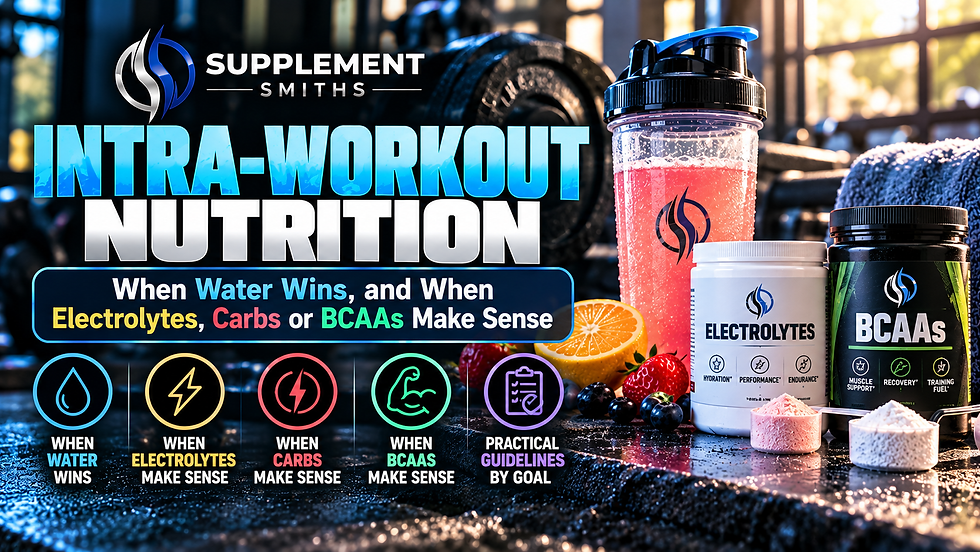
Check sodium per serving, potassium, magnesium, sugar, and caffeine. Servings and sweeteners vary a lot. For more on reading labels, see How to Read a Supplement Label in 60 Seconds How to Read a Supplement Label in 60 Seconds. For what to drink or take during a session, see Intra-Workout Nutrition Intra-Workout Nutrition: BCAAs, Carbs, and When Water Wins.
The takeaway
Start with water and food. Add electrolytes when the heat, the length of the session, or your sweat rate calls for more.
These statements have not been evaluated by the Food and Drug Administration. This product is not intended to diagnose, treat, cure, or prevent any disease.
The information in this article is for educational purposes only and is not medical advice. Talk with a qualified healthcare professional about hydration and sodium if you have a medical condition or take medication.

Comments