


Whey Protein 101: What It Is, the Main Types, and How to Pick a Flavor

Updated: 2 hours ago
Whey protein is one of the most widely used sports nutrition products, and one of the most confusing to shop for. Concentrate or isolate? Chocolate or something else? Does the flavor change how it works?
Short answer: the protein is the same job in every flavor, and the flavor decides whether you keep using it. This guide covers what whey is, the main types, how to read the label, and how to build a routine.
Key Takeaways
Whey is a complete protein made from milk.
Concentrate, isolate, and blends differ mainly in filtering, protein per scoop, lactose, and cost.
Flavor does not change what the protein does, but it affects whether you use it consistently.
Check the label for protein per serving, servings per container, allergens, and added sugars.
What whey is
Whey is the liquid left over when milk is made into cheese. It is dried into powder and sold on its own. It contains all of the essential amino acids, including leucine, which plays a role in muscle protein building.
The main types
Concentrate. Less filtered. Typically about 70–80% protein by weight, with more lactose and fat, and often a creamier taste.
Isolate. More filtered. Typically about 90% protein or more, with less lactose.
Hydrolysate. Partly broken down in advance. Often costs more and can taste more bitter.
Blend. A mix of two or more of these.
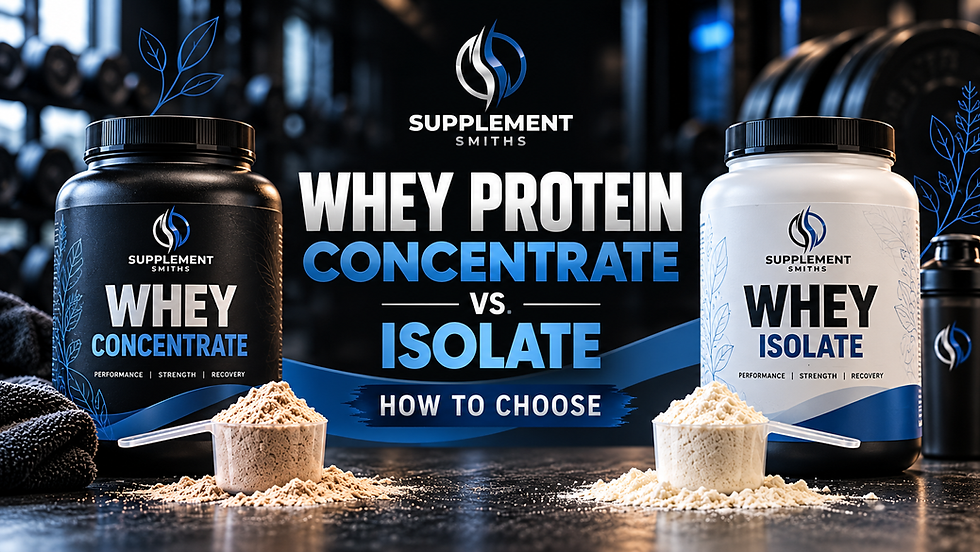
Our Superior Strength Chocolate Milkshake lists a blend of concentrate and isolate. For a deeper comparison, see Whey Concentrate vs. Isolate Whey Concentrate vs Isolate.
Flavor is about consistency
The best protein is the one you actually use. A tub that sits in the cabinet does not help your routine. Choosing a flavor you look forward to is a practical decision, not a performance claim.
Flavors available at Supplement Smiths include:
Check each product page for current Supplement Facts, ingredients, and allergens before you choose, since they can differ from flavor to flavor.
How to read a whey label
Protein per serving. Compare grams per serving, not the percentage on the front.
Servings per container. Divide the price by this number for cost per serving.
Added sugars and sweeteners. Worth a look if you also drink sweet coffee drinks or smoothies.
Allergens. Whey contains milk. Some products list other allergens too. The Chocolate Milkshake page lists soy as well.
For a full walkthrough, see How to Read a Supplement Label in 60 Seconds How to Read a Supplement Label in 60 Seconds.
Mixing tips
Cold liquid, the serving size on the label, and a thorough shake solve most problems. See our guide to mixing protein shakes How to Mix Protein Shakes Without Clumps or Chalkiness for fixes to clumps, chalkiness, and foam.
Who whey fits
Whey tends to fit people who train regularly, want a convenient protein source, and tolerate dairy. People who avoid dairy, have a milk allergy, or prefer whole foods can use other protein sources. Collagen is a different protein and does not have the same amino acid profile as whey, so it is not a one-for-one substitute for muscle-focused goals.
Building a simple habit
Pick one flavor to use for about a month.
Tie it to a trigger, such as after training or at breakfast.
If your daily protein is still low, add food, not extra scoops.
Change flavors if you get bored.
The takeaway
Pick the type that suits your digestion and budget, read the label for protein and allergens, and choose a flavor you will use. If you want more detail, read our concentrate vs. isolate guide Whey Concentrate vs Isolate, or browse the flavors above and review the full Supplement Facts and ingredient information.
These statements have not been evaluated by the Food and Drug Administration. This product is not intended to diagnose, treat, cure, or prevent any disease.
The information in this article is for educational purposes only and is not medical advice. Talk with a qualified healthcare professional about your health, allergies, medications, or supplement use.

Comments